How to Host a Holiday Sit-Down Dinner (and Still Enjoy the Moment)

This post may contain affiliate links. As an Amazon Associate, I earn from qualifying purchases at no additional cost to you. I only share products I personally use, love or genuinely recommend.
How to Host a Holiday Dinner
Hosting a holiday dinner can feel equal parts exciting and overwhelming. There’s the menu to plan, groceries to buy, dishes to prep, timing to coordinate—and somehow you’re supposed to sit down and enjoy yourself too!
The good news? With a little planning and a realistic approach, hosting a holiday dinner doesn’t have to leave you exhausted before everyone even arrives.
Whether you’re gathering around the table for Thanksgiving, Christmas, Easter, or another special occasion, these practical holiday dinner hosting tips will help you stay organized, get more done ahead of time, and spend less time stressing in the kitchen.
Most importantly, remember that your guests aren’t coming for a perfectly executed dinner. They’re coming to spend time together, share good food, and enjoy the holiday.
Start With the Menu (and Keep It Realistic)
Before anything else, decide what you’re serving.
Start with the basics:
- The main dish—turkey, ham, roast, chicken, etc.
- Side dishes
- Bread or rolls
- Appetizers
- Desserts
- Drinks
Once you have your initial list, take another look at it and think how much of that menu needs your attention at the last minute.
A holiday menu doesn’t need to be complicated to be special. In fact, choosing a few dishes that can be prepared ahead of time will make dinner day much easier.
This is also a good time to think about guests with food allergies or dietary restrictions. It’s much easier to plan a gluten-free, dairy-free, vegetarian, or other suitable option now than to discover at the dinner table that someone has very little they can eat.
Plan for Your Guests (and the Right Amount of Food)
Once you know what you want to serve, think about who you’re serving rather than relying too heavily on standard serving-size charts.
You know your family and friends better than any chart does. Some guests may have hearty appetites, while others will take a little of everything and barely finish their plates. Kids may eat less than adults, and a table filled with appetizers, side dishes, bread and dessert can change how much everyone eats of the main course.
Think about your menu as a whole, too. If you’re serving several side dishes, you probably don’t need a huge amount of every one. On the other hand, if your family looks forward to a particular dish all year, making a little extra might be a very good idea!
A few things to consider when deciding how much to prepare:
- How many adults and children are coming?
- Do you have any particularly big—or small—eaters in the group?
- How many appetizers and side dishes are you serving?
- Are there certain family favorites everyone will want seconds of?
- Do you want leftovers for another meal?
- Will you be sending leftovers home with guests?
When in doubt, I’d rather have a little extra of the foods I know everyone loves than make enormous amounts of everything. A well-rounded menu with a little breathing room is usually much easier to manage—and you won’t end the night wondering how you’re going to fit six casserole dishes of leftovers into the refrigerator!
Make One Complete Shopping List
Now that the menu is set, create one master shopping list with everything you’ll need.
Include:
- Meat
- Potatoes and vegetables
- Herbs and aromatics
- Butter, cream, cheese
- Broth, gravy and sauces
- Baking ingredients such as chocolate, sugar and flour
- Drinks and extras
Go through each recipe one at a time and add every ingredient to the list—even the things you’re pretty sure you already have.
Then check your pantry, refrigerator and freezer and cross off what you don’t need to buy.
There’s nothing worse than realizing halfway through making dinner that you’re almost out of butter, broth or another ingredient you were certain was in the pantry.
Make Room in the Refrigerator — Before You Need It
As you’re planning your holiday meal, take a look inside your refrigerator and freezer and think about how much space you’ll need in the days leading up to dinner.
Holiday groceries take up a surprising amount of room—and that’s before you start assembling casseroles, making desserts or thawing a turkey or other large cut of meat.
Start clearing space early. Use up or freeze leftovers, toss anything that’s expired, and consolidate partially filled containers when you can. As you plan your menu, consider where you’ll store foods that need to be made or prepared ahead of time.
If you’re serving a turkey or another large piece of meat that is frozen, don’t wait until a few days before dinner to think about thawing it. Check the recommended thawing time based on its size well in advance and make sure you’ll have enough refrigerator space to thaw it safely.
As dishes come out of the refrigerator for baking and serving, space will naturally become available again. That extra room will come in handy for anything guests bring that needs to stay cold and for storing leftovers after dinner.
A little refrigerator planning ahead of time can save you from playing a very frustrating game of “Where am I going to put THIS?” when you’re already in the middle of holiday prep.
Need a Little Extra Cold Storage?
If refrigerator space is especially tight, a well-insulated cooler can provide some temporary overflow space for certain refrigerated foods. Pack it with plenty of ice or frozen gel packs and use a refrigerator thermometer to make sure the temperature stays at 40°F or below.
A cooler can also be a great place to keep drinks cold, freeing up valuable refrigerator space for foods that really need it. Keep the cooler closed as much as possible, and if you’re using one for perishable foods, check the temperature periodically rather than assuming everything is staying cold.
If outdoor temperatures are chilly, resist the temptation to use the porch, garage or deck as a makeshift refrigerator. Outdoor temperatures can fluctuate considerably, and food may not stay at a consistently safe temperature.
Prep Ahead Whenever Possible
One of the biggest stress reducers when hosting a holiday dinner is doing as much as possible before the big day.
Ask yourself:
- Which desserts can I make a few days ahead?
- What vegetables can be washed, peeled or chopped?
- Can the meat be brined, seasoned or marinated in advance?
- Are there sauces, dips or dressings I can make early?
Even small tasks done ahead of time can make a huge difference.
If the carrots are already peeled, onions are chopped, desserts are finished and ingredients are measured, you have far fewer things demanding your attention at once.
Fully Assemble What You Can
Some dishes can be completely assembled ahead of time and refrigerated until they’re ready to bake.
This works especially well for dishes like:
- Scalloped potatoes
- Gratins
- Casseroles
- Stuffing or dressing
Instead of simply putting the ingredients away, assemble the finished dish right in its baking dish whenever the recipe allows. Cover and refrigerate it until you’re ready to bake.
On dinner day, consider taking refrigerated casseroles out of the refrigerator about 30 minutes before baking to take some of the chill off—provided the ingredients can safely sit at room temperature for that amount of time. This can help the dish heat more evenly, but remember that a thoroughly chilled casserole may still need a little extra time in the oven. Follow the recipe for baking temperature and set a kitchen timer, but keep in mind that baking times are a guide—your dish should be fully heated and cooked through before removing it from the oven.
Also check the manufacturer’s instructions for your bakeware before moving a cold dish into a hot oven, particularly when using glass or ceramic dishes that may be sensitive to sudden temperature changes.
When dinner day arrives, most of the work is already done. Instead of measuring, chopping, mixing and assembling, you can simply concentrate on getting everything baked, heated and onto the table.
Do As Much as Possible Before Dinner Day
The more you can do before the actual day of the dinner, the calmer your kitchen will be.
Waiting until the last minute often adds unnecessary pressure and makes everything feel rushed. Preparing early gives you breathing room—and confidence.
This doesn’t mean everything has to be completely cooked ahead of time. Even setting the table, chopping vegetables, organizing ingredients or pulling out serving dishes takes something off your dinner-day list.
Plan Your Bakeware and Serving Dishes
Take a little time to think through not only what you’re cooking, but what you’re cooking and serving it in.
Ask yourself:
- What dishes will each item be cooked in?
- What will I use for serving?
- Do I have enough serving utensils?
- Does anything need a platter, gravy boat, trivet or warming dish?
I like to pull everything out ahead of time and organize it so it’s ready when I need it.
Don’t forget about your roasting pan, either. If you’re serving a turkey, ham or large roast, make sure your roasting pan is large enough to comfortably hold it—and that the pan itself will fit in your oven.
If your roasting pan has a removable rack or other accessories, make sure you have everything you’ll need before dinner day. The day you’re cooking a holiday dinner is definitely not the time to discover that your turkey doesn’t fit in the roasting pan!
This is the roasting pan I use, and with its removable rack, it works well for a variety of different meats. I also remove the rack and use the pan for large-batch dishes, like lasagna, when I’m feeding a crowd.
I’ll even put a small note in each serving dish with what I’m going to use it for. It’s a simple way to stay organized and make sure I don’t accidentally grab a dish I’ll need later.
I also like to use simple, reliable baking dishes that can go from oven to table without fuss.
These Corning Ware baking dishes are the ones I use and work beautifully for make-ahead sides.
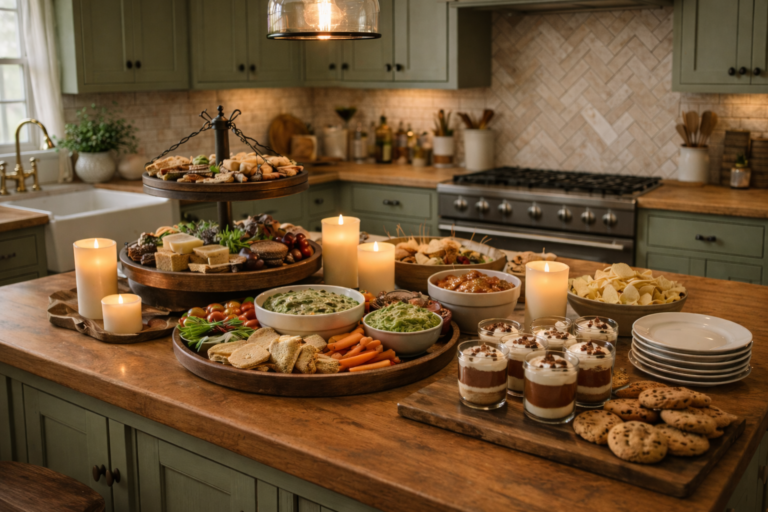
This is also a great time to think about how everything will fit on the table or buffet. If serving space is limited, tiered serving trays, cake stands and platters at different heights can help you fit more onto the table while making everything look beautiful.
Plan Around Your Oven
Before you plan too many dishes that need the oven, think about how much oven space you’ll actually have. It’s easy to plan several baked side dishes without realizing they’ll all be fighting for oven space at the same time.
Your turkey or roast may occupy the oven for several hours, while casseroles, stuffing and rolls may all need different baking temperatures.
A little planning ahead can keep you from discovering an hour before dinner that everything needs the oven at once.
Choose a combination of:
- Oven-baked dishes
- Stovetop sides
- Slow-cooker dishes
- Pressure-cooker dishes
- Cold or room-temperature sides
Don’t forget about alternative cooking methods, either. Depending on what you’re serving and the equipment you have available, a smoker, grill or large-capacity air fryer may be an option for cooking your turkey, ham or roast. Moving the main dish out of the oven can free up valuable space for casseroles, stuffing, rolls and other sides—just be sure to plan your cooking times and temperatures accordingly.
When possible, choose baked dishes with similar cooking temperatures so several things can go into the oven together.
Also remember that a turkey or roast generally needs time to rest before carving. That resting period can give you valuable oven time to finish casseroles, warm rolls or reheat another dish.
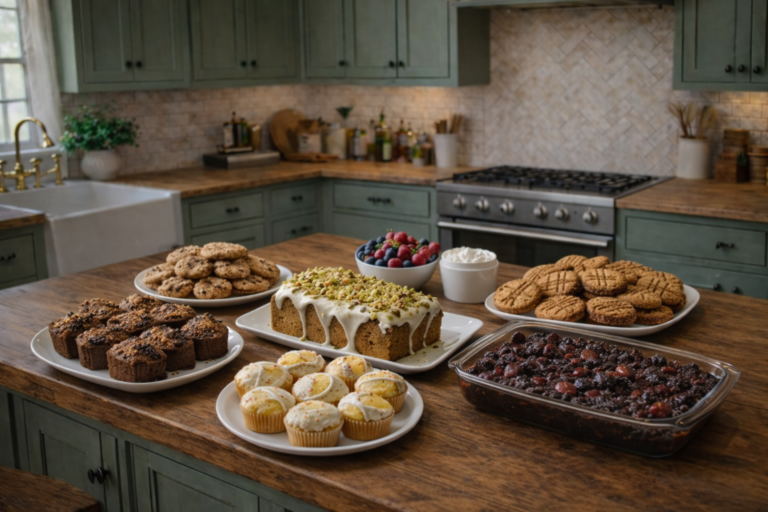
Think Through Dessert Presentation
Desserts don’t just need to taste good—they need somewhere to go!
Before the dinner day, decide:
- Where desserts will be set up
- How you’ll display them
- What serving utensils you’ll need
Using varying heights, such as a simple two-tier stand or a mix of wood serving boards, classic white platters and cake stands, adds visual interest without taking up as much table space.
For dessert plates, I love using different heights so everything feels intentional without feeling fussy.
A simple presentation can make even an everyday dessert feel special.
Make a Simple Dinner-Day Plan
Once your menu is finalized, make a simple plan for dinner day. Start with the time you hope to serve dinner, then look over your menu and jot down approximately when each dish needs to be started.
Include the important things you’ll need to remember throughout the day, such as:
- Cooking and baking times
- Oven temperatures
- Resting time for meat
- Dishes that need to be reheated
- Sauces or gravy that still need to be prepared
- Bread or rolls that need to be warmed
- Foods that need to come out of the refrigerator
- Final table or serving preparations
There’s no need to schedule every minute of your day. A simple plan of what needs to be done and when will help keep you on track without trying to remember everything once the kitchen gets busy.
It can also help you spot dishes that need the oven at the same time, decide what can stay warm while something else finishes, and avoid realizing at the last minute that you should have started something an hour ago.
Most importantly, give yourself a little extra time whenever you can. Holiday cooking doesn’t always go exactly according to schedule, and it’s much easier to keep something warm for a few minutes than to have an entire table waiting for one dish to finish.
Keep Guests Out of the Kitchen Traffic Jam
Somehow, no matter how much room there is in the house, everyone seems to gather in the exact spot where you’re trying to cook!
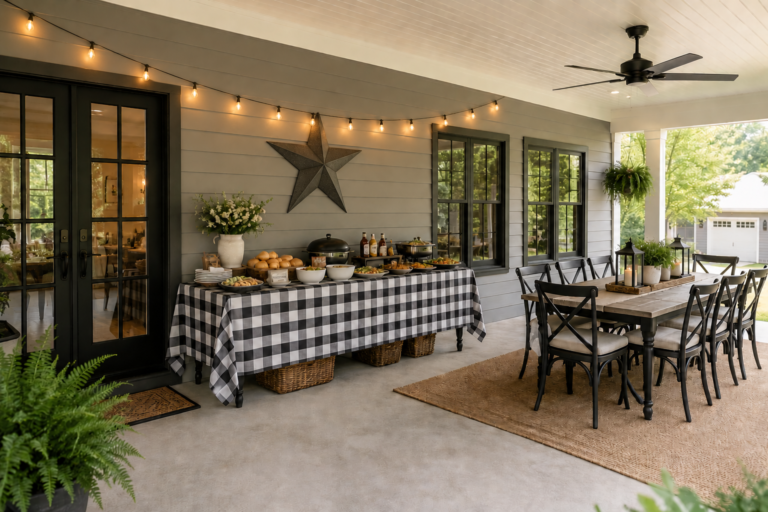
Creating separate areas for drinks and appetizers can help keep traffic out of the kitchen.
Consider setting up:
- A drink station with glasses, ice and beverages
- An appetizer area away from your main work space
- A coffee and dessert station for later
Guests can help themselves without needing to ask you where everything is, and you get a little more room to finish dinner.
Ask for Help
Hosting a sit-down dinner is a lot of work—and most people understand that.
Don’t hesitate to ask for help.
Guests can:
- Set the table
- Bring a side dish
- Help with dishes
- Refill drinks
- Carry food to the table
Sharing the workload makes the gathering feel lighter for everyone.
Plan for Leftovers Before Dinner
Don’t wait until everyone has finished eating and you’re exhausted to figure out what to do with all that food.
Before guests arrive, make sure you have:
- Food-storage containers
- Foil or reusable wraps
- Storage bags
- Refrigerator space
- Containers for anything you’re sending home with guests
Knowing where everything will go makes cleanup much easier.
And those leftovers don’t have to mean eating the exact same dinner for three days. Turkey, ham, roast beef and other holiday foods can become soups, casseroles, sandwiches and entirely new meals.
Keep Food Safety in Mind
With so many dishes being prepared, served and stored, food safety can easily become an afterthought during a busy holiday.
Keep cold foods refrigerated until they’re needed and avoid leaving perishable foods sitting at room temperature for extended periods.
Use a simple thermometer when cooking meat and poultry, and refrigerate leftovers promptly after dinner.
If you’re thawing a turkey or other large piece of meat, plan ahead and use a safe thawing method rather than waiting until the last minute. For specific guidance on safely thawing, cooking and storing holiday foods, the USDA’s food safety resources are a helpful reference.
A little planning here protects both your food and your guests.
Let Go of Perfection
Even with the best planning, things can go wrong.
I’ve had:
- Undercooked turkey
- Overcooked potatoes
- Doughy rolls
- Desserts that didn’t set quite right
It happens—to all of us.
If something isn’t perfect, take a deep breath. Pivot if you can, or simply let it go. What people remember most isn’t perfection — it’s how they felt being there.
Your guests are much more likely to remember laughing around the table than whether the potatoes were exactly right.
Be a Guest at Your Own Dinner
When you plan, organize, and prepare ahead of time, something wonderful happens:
You get to become a guest at your own dinner.
No panic. No running around trying to finish twelve things while everyone else is eating.
Once the food reaches the table, sit down.
Eat while it’s hot. Join the conversation. Laugh with your family and friends. Enjoy the meal you worked so hard to prepare.
You’ve done enough.
Final Thought
Hosting a holiday dinner doesn’t have to be stressful to be special.
With thoughtful planning, realistic expectations and a little prep ahead of time, you can create a gathering that feels warm, welcoming and meaningful—without spending the entire holiday overwhelmed in the kitchen.
Prepare what you can ahead of time. Ask for help when you need it. Don’t worry when something doesn’t turn out exactly as planned.
And most importantly, remember why everyone gathered around your table in the first place.
The food brings everyone together.
The memories are what make the holiday special.